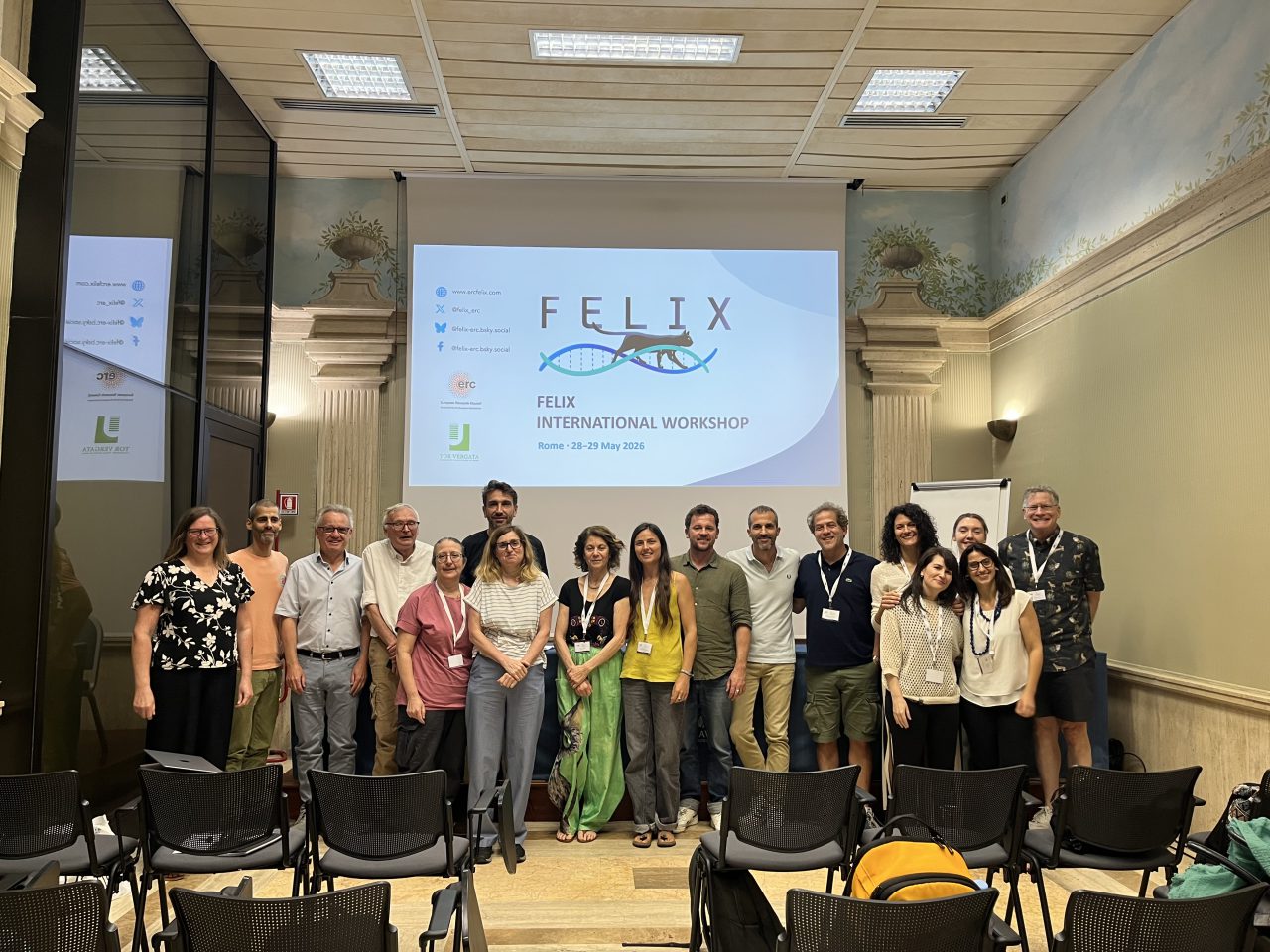
How did cats become our companions, and how has their relationship with humans changed over thousands of years? These questions were at the heart of the FELIX International Workshop, held in Rome on 28–29 May 2026.
The meeting brought together researchers from different disciplines to explore cat domestication through ancient DNA, archaeological remains, skeletal morphology, stable isotopes, ecology and behaviour. Together, these approaches offer complementary insights into the biological and cultural processes that shaped the history of domestic cats.
A central theme was the contribution of paleogenomics to reconstructing the origins and dispersal of cats. Ancient genomes provide evidence of past population movements, genetic diversity and selection, helping researchers investigate how cats spread between regions and adapted to life alongside humans. Comparisons with dogs offered a broader perspective on the diversity of domestication pathways.
Discussions also explored how archaeological and dietary evidence can reveal the everyday relationships between cats and people. From ancient Egypt to medieval towns, skeletal remains and stable isotope analyses help reconstruct the environments cats inhabited, the food they consumed and their connections with human communities.
The ecology and behaviour of modern cats added another dimension, raising questions about the extent to which domestication has transformed an animal that retains many characteristics of its wild ancestors.
The workshop provided a forum for exchanging ideas across disciplines and discussing future research within FELIX, the European Research Council-funded project investigating the long and complex history of cats and humans.