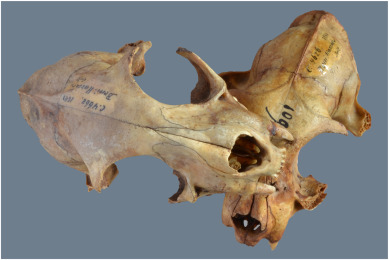
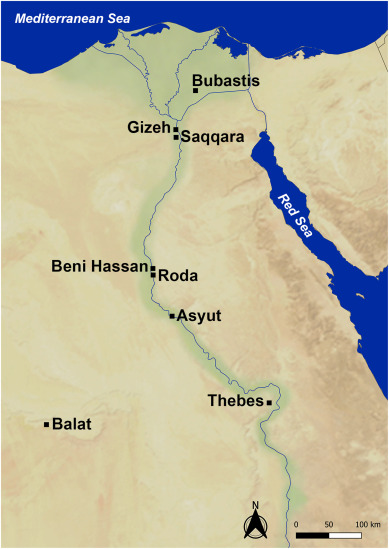
In this study, published in Journal of Archaeological Science, we examined a large collection of cat skulls recovered when cat mummies from Beni Hassan, Egypt, were unwrapped in the late 19th century. Housed at the Natural History Museum in Vienna, this collection was virtually unknown to the scientific community. It is unique in being the largest known assemblage of cat skulls from Ancient Egypt with a documented archaeological provenance.
Our findings suggest that cats kept for subsequent mummification as votive offerings were not limited to domestic cats. The collection also includes jungle cats, apparently captured from the wild at a young age. Both domestic cats and jungle cats show a high incidence of disease and traumatic injuries, suggesting that they were kept together under similarly poor captive conditions.
The study provides new evidence of violence involving both humans and cats, as well as aggression between cats. Some skulls show injuries that were fatal, while others bear evidence of trauma from which the animals survived. We also identified bite wounds resulting from aggression between felids, including both healed and unhealed injuries, which, to our knowledge, have not previously been reported in the archaeozoological or Egyptological literature.